
IPOB Leader Nnamdi Kanu Sentenced to Life Imprisonment on Terrorism Charges
Credit:
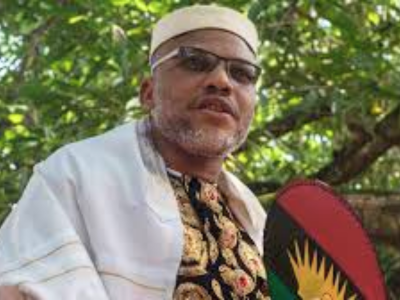
Justice James Omotosho of the Federal High Court in Abuja has convicted Indigenous People of Biafra (IPOB) leader Nnamdi Kanu on all seven terrorism counts, sentencing him to life imprisonment on four major charges, with lesser concurrent terms on the remaining counts.
The ruling caps a decade-long trial marked by legal twists, political pressure, and regional unrest.
Kanu, 58, was ejected from the courtroom for unruly behavior after shouting, “This court cannot deliver any judgment,” prompting Justice Omotosho to invoke Section 352 of the Administration of Criminal Justice Act to proceed in absentia. The judge ruled that prosecutors had proven beyond reasonable doubt that Kanu’s broadcasts incited violence, enforced sit-at-home orders that caused economic sabotage, and threatened the British High Commission—acts deemed terrorism under the Terrorism (Prevention) (Amendment) Act 2013.
Omotosho dismissed Kanu’s motions on jurisdiction, bail, and final address as “unmeritorious,” noting his refusal to present a defense left no alternative but conviction. While describing Kanu as a “terrorist” who “brought more harm to his people,” the judge opted against the death penalty, citing mercy rooted in “Holy Book teachings” and global opposition to capital punishment. Kanu will remain in monitored protective custody at an undisclosed DSS facility, barred from unsupervised access to devices.
Defense lawyer Ifeanyi Ejiofor vowed an immediate appeal to the Court of Appeal and, if necessary, the Supreme Court, arguing: “A man cannot be convicted for mere spoken words… What precedent is being laid?” Outside the court, Kanu’s brother Kingsley denounced the ruling as “selective judgment.
The verdict follows Kanu’s 2015 treason arrest, his 2017 bail jump after a military raid on his Abia home, and his 2021 extradition from Kenya. His brief appellate victory in 2022 was overturned by the Supreme Court in 2023.
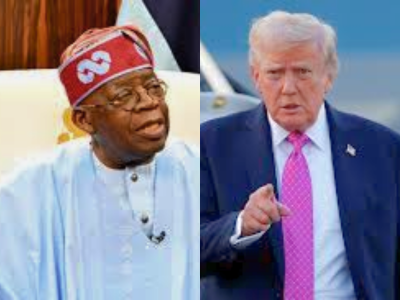
Just days before this judgment, 44 House members urged President Tinubu to consider a political release to ease tensions in the South-East, where enforced sit-at-home orders have cost the economy an estimated ₦1 trillion annually since 2021.




0 Comment(s)